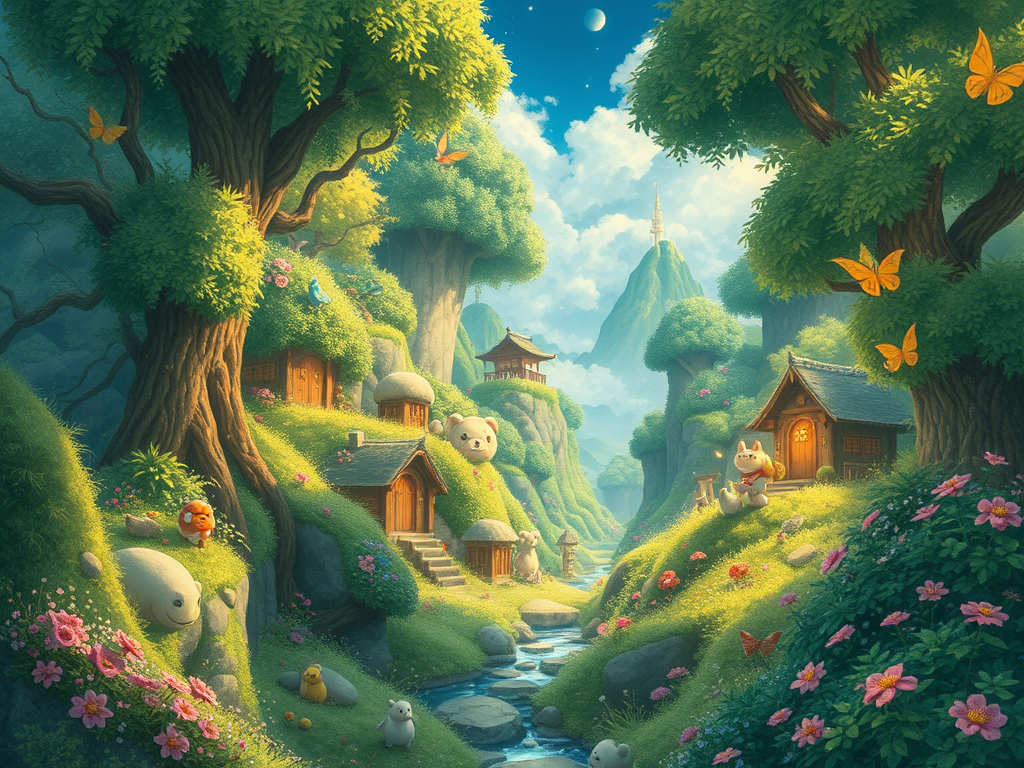
The recent viral phenomenon of ChatGPT generating images in Studio Ghibli’s distinctive style has raised serious questions about whether OpenAI trained its image generation models on copyrighted Ghibli content without permission. While there is no definitive confirmation, evidence points to a complex situation with significant copyright implications.
The Conflicting Policies Within OpenAI
One of the most telling aspects of this controversy is OpenAI’s inconsistent approach to Ghibli-style image generation across its own products:
Contradictory Responses from Different Models
The free version of ChatGPT, which uses OpenAI’s older DALL-E 3 image generator, explicitly refuses to create Ghibli-style images, stating that it cannot generate such images “because Ghibli is a copyrighted animation studio, and its artistic style is protected.” This message clearly acknowledges potential copyright concerns.
However, ChatGPT’s paid version, which uses the newer 4o model, readily generates Ghibli-style images upon request. This inconsistency suggests a deliberate policy shift rather than a technical limitation, raising questions about OpenAI’s approach to copyright in its newer models.
When asked about this discrepancy, OpenAI provided only limited clarification, stating that while they prevent “generations in the style of individual living artists,” they do permit “broader studio styles.” This distinction appears to create a convenient loophole for using studio-associated content.
Training Data: The Black Box Problem
Secrecy Surrounding OpenAI’s Training Data
OpenAI has never publicly disclosed the specific datasets used to train DALL-E or its other image generators. This lack of transparency makes it impossible to definitively confirm whether Ghibli images were included. OpenAI treats its training data as highly proprietary, with court orders requiring strict security measures when lawyers need to examine it in copyright cases.
What we do know is that OpenAI has consistently maintained that “training AI models using publicly available internet materials is fair use” based on established legal precedents. This suggests that if Ghibli images were widely available online, OpenAI might have included them in training datasets without seeking permission.
The Evidence of Capability
The accuracy with which GPT-4o can replicate Studio Ghibli’s distinctive visual style strongly suggests the model was trained on a substantial number of Ghibli images. According to technology news site TechCrunch, OpenAI’s image generator was “the most accurate to the animation studio’s style by far” when compared to other AI image generators.
As intellectual property lawyer Weinberg noted, while style itself isn’t protected by copyright, what people often refer to as “style” might include specific, identifiable elements of artwork. “In ‘Howl’s Moving Castle’ or ‘Spirited Away,’ you could freeze any frame and identify distinct aspects, then compare them to the output from generative AI, which might show identical or very similar elements,” he explained.
OpenAI’s Position on Copyright and Training
The Fair Use Argument
OpenAI has consistently argued that training AI on publicly available internet materials constitutes fair use. In recent submissions to the U.S. government, OpenAI has framed copyright access as a “matter of national security,” arguing that if Chinese AI developers have unrestricted data access while American companies don’t, “the AI race is essentially over.”
Despite claiming legal right to train on publicly available content, OpenAI offers publishers an opt-out mechanism, stating that “legal right is less important to us than being good citizens.” There is no evidence that Studio Ghibli participated in this opt-out program before the controversy erupted.
The Evolving Legal Landscape
The legal foundation for OpenAI’s position has recently been challenged. In a landmark decision, a court ruled against AI company Ross Intelligence, finding that training on Thomson Reuters’ copyrighted legal materials was not fair use. This ruling could potentially undermine OpenAI’s blanket fair use claims, especially when the AI product directly competes with or diminishes the market for the original works.
Hayao Miyazaki and Ghibli’s Stance on AI
The founder of Studio Ghibli, Hayao Miyazaki, has previously expressed strong opposition to AI in animation. In 2016, after viewing an AI demonstration, Miyazaki called it “an insult to life itself” and explicitly stated he would “not wish to use this technology in my work at all.”
Miyazaki expressed concern that AI represents humans “losing faith in ourselves,” saying “I feel like we are nearing the end of times.” This philosophical opposition makes it highly unlikely that Miyazaki would have willingly granted permission for OpenAI to use Ghibli’s work for AI training.
Studio Ghibli as a company has not yet issued an official statement about OpenAI’s use of their artistic style in this specific controversy, though in December 2024, they announced plans to pursue “civil and criminal” actions against online retailers selling unlicensed Ghibli merchandise.
Public and Creator Reactions
The social media response to Ghibli-style AI images has been divided. While some users celebrated the ability to transform their photos into Ghibli-esque art, many artists and fans expressed outrage at what they perceive as artistic theft.
One viral criticism on social media summarized the anger: “OpenAI has stolen Studio Ghibli’s artwork & these morons are cheering and clapping for it as if this crap has actually achieved anything. They’re literally advertising a plagiarism program that hasn’t compensated nor sought permission from Studio Ghibli. F*** these people.”
Artist Karla Ortiz, who grew up watching Miyazaki’s films and is suing other AI image generators for copyright infringement, labeled this situation as “another clear example of how companies like OpenAI disregard the work and livelihoods of artists.” She added, “They’re leveraging Ghibli’s brand, name, and reputation to promote their products. It’s an insult and an act of exploitation.”
Conclusion
While there is no definitive confirmation that OpenAI used Studio Ghibli images in training its models, the circumstantial evidence is strong. The accuracy with which GPT-4o reproduces Ghibli’s style, OpenAI’s inconsistent policies between its models, the company’s general approach to training on publicly available content, and the lack of any announced licensing agreement all suggest that Ghibli content was likely used without explicit permission.
This controversy represents just one high-profile example of the broader ethical and legal questions surrounding AI training data. As legal challenges mount against AI companies for using copyrighted content without permission, the outcome of these cases will likely shape the future of AI development and potentially affect how OpenAI and other companies approach content licensing and usage rights.
Sources
- Business Insider. (2025, March). ChatGPT can’t decide whether its Ghibli-style images violate copyright or not. Retrieved from https://www.businessinsider.com/openai-studio-ghibli-style-images-violate-copyright-or-not-2025-3
- Associated Press. (2025, March). ChatGPT’s viral Studio Ghibli-style images highlight AI copyright concerns. Retrieved from https://apnews.com/article/studio-ghibli-chatgpt-images-hayao-miyazaki-openai-0f4cb487ec3042dd5b43ad47879b91f4
- BGR. (2025, March). ChatGPT’s Studio Ghibli-style images spark fierce debate: ‘F*** these people.’ Retrieved from https://bgr.com/tech/chatgpts-studio-ghibli-style-images-spark-fierce-debate-f-these-people/
- TechCrunch. (2025, March 26). OpenAI’s viral Studio Ghibli moment highlights AI copyright concerns. Retrieved from https://techcrunch.com/2025/03/26/openais-viral-studio-ghibli-moment-highlights-ai-copyright-concerns/
- NightCafe Studio. (n.d.). What DALL-E Dataset Did OpenAI Use? Retrieved from https://nightcafe.studio/blogs/info/what-dall-e-dataset-did-openai-use
 The Whizbang Weekly
Leave a comment